Показаны сообщения с ярлыком language. Показать все сообщения

вторник, 17 сентября 2019 г.

Bulk Generating Cloze Deletions for Learning a Language with Anki


Bulk Generating Cloze Deletions for Learning a Language with Anki

View original article

tldr; Looking to learn a language using cloze deletions and Anki? Click here.

One challenge in learning a second language is the sheer amount of vocabulary required for fluency. For example, one study has shown that the average eight year old knows 8000 words, while the average adult might know somewhere between 20,000 and 35,000 words. University graduates might know upwards of 50,000 words depending on their specialization.

As an adult learning a second language, exposure to a lot of different words in their context is one of the best ways to learn vocabulary. A common test for learning words in context is called a cloze test.

"A cloze test (also cloze deletion test) is an exercise, test, or assessment consisting of a portion of text with certain words removed (cloze text), where the participant is asked to replace the missing words. Cloze tests require the ability to understand context and vocabulary in order to identify the correct words or type of words that belong in the deleted passages of a text. This exercise is commonly administered for the assessment of native and second language learning and instruction."

Wikipedia

For example, here is a cloze test from the previously linked Wikipedia article.

Today, I went to the ________ and bought some milk and eggs. I knew it was going to rain, but I forgot to take my ________, and ended up getting wet on the way.

The interesting thing about cloze tests is that they force you to understand both vocabulary and the context where it is used. In the previous example, the first blank is preceded by the word the, and therefore must be followed by a noun, adjective, or adverb. However, a conjunction follows the blank; the sentence would not be grammatically correct if anything other than a noun were in the blank. Correctly completing the test forces the learner to understand both vocabulary and grammatical rules of vocabulary usage. This makes cloze tests ideal for learning and testing a second language.

I use Anki — a program that helps make remembering things as easy as possible — to automate how frequently I complete cloze tests. Because Anki is a lot more efficient than traditional study methods, you can greatly decrease your time spent studying to learn vocabulary. Unfortunately, Anki requires you to create your own cloze tests, which can be a tedious and time consuming process. Being a software engineer, I began looking at how to automate the process of creating cloze tests for Anki and came up with an automatic method using publicly available data.

The rest of this article describes the process I used for automatically creating cloze tests for import into Anki, followed by links to download pre-packaged Anki decks for learning French as an English speaker created using this method..

Raw Sentences

The first step is to collect a lot of sentences in your target language. Ideally, sentences would have a translation in your native language to help understand any contextual clues for completing the cloze test. The website Tatoeba provides a collection of user generated sentences and translations, which makes an ideal data set for sentences. All data is available for download under a Creative Commons Attribution 2.0 license (CC-BY 2.0) as a set of simple tab separated files. The files come in two formats: first, a list of all sentences and the language they are written in, and second, a list of links between the sentences that shows which sentences are translations of each other.

The sentences dataset looks like the following, where the first number is the sentence identifier, followed by the language, followed by the text.

107	deu	Ich kann mich nur fragen, ob es für alle anderen dasselbe ist.  1115	fra	Lorsqu'il a demandé qui avait cassé la fenêtre, tous les garçons ont pris un air innocent.  6557647	eng	I sing of arms and the man, made a fugitive by fate, who first came from the coasts of Troy, to Italy and the Lavinian shores.

The links dataset provides a simple mapping between sentence numbers, showing which sentences are translations of each other.

1	77  1	1276  1	2481  1	5350  1	5972  1	180624  1	344899  1	345549  1	380381  1	387119

Frequency Lists

The sentences from Tatoeba provide a great starting point for generating cloze deletions. The question still remains, which word to use for the cloze? That is, which word will be the blank in the fill in the blank problem?

Not all words are created equal, some are so common that they are used in almost every sentence and are therefore not that interesting to learn, others are used so infrequently that they would not be useful for everyday speech. In the middle are the 20,000 or so words that are used regularly enough that they can provide a basis for fluency in a second language.

A sorting of words into the frequency with which they appear in a corpus of language is called a frequency list. Wiktionary provides a list of frequency lists available in many languages. I used a premade list made available under an MIT license on Github. This list tracks the 50,000 most frequently used words in TV and movie subtitles maintained by the OpenSubtitles project.

I chose the cloze deletion to test using the same method used by clozemaster.

The cloze deletion to test, or the blank in the sentence, is the least common word in the sentence within the [5]0,000 … most common words in the language. In other words, for a given sentence all the words in the sentence are checked against the top [5]0,000 words in a fequency list for that language. The least common word is then used as the cloze test. In this way the vocab learned via clozemaster is the most difficult of the most common.

Generating the Cloze Tests

Using the original sentences with translations, and a frequency list, I created a set of cloze deletions using a Python script.

Finding target and native language sentences

The first step was to extract out the sentences from Tatoeba that are available in my native language and target language. I used a simple grep expression to create two files from the original sentence data.

grep -E '\teng\t' sentences.csv > native_sentences.csv  grep -E '\tfra\t' sentences.csv > target_sentences.csv

Choosing the cloze word

The following function takes a sentence and a frequency list (as a map), and chooses a cloze word. I skipped any words that were capitalized and removed any words that were two characters or shorter. Any words left over were checked against the frequency list and the minimum frequency word was used for the cloze. If there were no words in the sentence that had frequency data attached, a random word was chosen.

def find_cloze(sentence, frequency_list):      """      Return the least frequently used word in the sentence by.      If no word is found in the frequency list, return a random word.      If no acceptable word is available (even random), return None      """      # Remove punctuation      translator = str.maketrans(string.punctuation, ' '*len(string.punctuation))      sentence = sentence.translate(translator)        max_frequency = 50001  # Frequency list has 50,000 entries      min_frequency = max_frequency        min_word = None      valid_words = []      for word in sentence.split():          if word.isupper() or word.istitle():              continue  # Skip proper nouns          if len(word) <= 2:              continue  # Skip tiny words            valid_words.append(word)            word_frequency = int(frequency_list.get(word.lower(), max_frequency))          if word_frequency < min_frequency:              min_word = word              min_frequency = word_frequency        if min_word:          return min_word      else:          if valid_words:              return random.choice(valid_words)          else:              return None

Synthesizing speech

I used Amazon Polly to attach audio samples to the target language. The script randomly chooses a voice in the target language to add a bit of variety to the audio.

import boto3    polly = boto3.client('polly')    def synthesize_speech(text, filename):      """      Synthesize speech using Amazon polly      """      voices = ['Celine', 'Mathieu', 'Chantal']      voice = random.choice(voices)        response = polly.synthesize_speech(          OutputFormat='mp3',          Text=text,          VoiceId=voice      )        output = os.path.join("./out/", filename)        if "AudioStream" in response:          with closing(response["AudioStream"]) as stream:              with open(output, "wb") as outfile:                  outfile.write(stream.read())

Generating a CSV for Anki

Given the algorithm for choosing a cloze word, and a method for synthesizing speech, the last step is to generate a CSV file from the data sets that can be input into Anki. The CSV generation requires a file of french and english sentences, the links file between the translations, and the frequency list. It matches sentences with their translations, chooses a cloze deletion, and synthesizes an audio sample of the sentence.

def make_index(path, delimiter, value=1):      """      Given a CSV reader, return a map between the first column and the      column specified by value.      """      d = dict()      with open(path, newline='') as f:          reader = csv.reader(f, delimiter=delimiter)          for row in reader:              d[row[0]] = row[value]      return d      def generate(french_sentence_file,               english_sentence_file,               links_file,               frequency_list_file):      # Make index between sentence number and rest of csv      print("Making indexes ...")        french = make_index(french_sentence_file, '\t', value=2)      english = make_index(english_sentence_file, '\t', value=2)      links = make_index(links_file, '\t')        # Make index between word and usage frequency      frequency = make_index(frequency_list_file, ' ')        print("Generating clozes ...")      with open("out.csv", 'w', newline='') as outfile:          writer = csv.writer(outfile, delimiter='\t',                              quotechar='|', quoting=csv.QUOTE_MINIMAL)            # For each French sentence          for fra_number, fra_sentence in french.items():              # Lookup English translation              eng_number = links.get(fra_number)              if not eng_number:                  continue  # If no English translation, skip                eng_sentence = english.get(eng_number)              if not eng_sentence:                  continue  # If no English translation, skip                # Find the cloze word              fra_cloze_word = find_cloze(fra_sentence, frequency)              if not fra_cloze_word:                  continue  # If no cloze word, skip                clozed = fra_sentence.replace(fra_cloze_word,                                            '{{{{c1::{}}}}}'.format(fra_cloze_word)                # Generate audio              audio_filename = 'fra-{}-audio.mp3'.format(fra_number)              if not os.path.isfile(audio_filename):                  synthesize_speech(fra_sentence, audio_filename)                writer.writerow([fra_number,                               clozed,                               eng_number,                               eng_sentence,                               '[sound:{}]'.format(audio_filename)])        print("Done.")

Importing into Anki

Given the CSV file and a list of mp3 audio samples, the next step is to import the data into Anki. The audio is imported by copying the files into Anki's collection.media folder. See the Anki manual for more information.

Once the media files are imported, you can import the CSV file generated by the cloze script into Anki. To import a file, click the File menu and then "Import". For more information, see the Anki manual.

Downloads

I used this process to generate French cloze deletions suitable for English speakers learning French. You can download pre-made packages that you can import into Anki to start learning French here.

See also

Bulk Generating Cloze Deletions for Learning a Language with Anki

One challenge in learning a second language is the sheer amount of vocabulary required for fluency. For example, one study has shown that the average eight year old knows 8000 words, while the average adult might know somewhere between 20,000 and 35,000 words. University graduates might know upwards of 50,000 words depending on their specialization.


As an adult learning a second language, exposure to a lot of different words in their context is one of the best ways to learn vocabulary. A common test for learning words in context is called a cloze test.
“A cloze test (also cloze deletion test) is an exercise, test, or assessment consisting of a portion of text with certain words removed (cloze text), where the participant is asked to replace the missing words. Cloze tests require the ability to understand context and vocabulary in order to identify the correct words or type of words that belong in the deleted passages of a text. This exercise is commonly administered for the assessment of native and second language learning and instruction.”
— Wikipedia


For example, here is a cloze test from the previously linked Wikipedia article.
Today, I went to the ________ and bought some milk and eggs. I knew it was going to rain, but I forgot to take my ________, and ended up getting wet on the way.
The interesting thing about cloze tests is that they force you to understand both vocabulary and the context where it is used. In the previous example, the first blank is preceded by the word the, and therefore must be followed by a noun, adjective, or adverb. However, a conjunction follows the blank; the sentence would not be grammatically correct if anything other than a noun were in the blank. Correctly completing the test forces the learner to understand both vocabulary and grammatical rules of vocabulary usage. This makes cloze tests ideal for learning and testing a second language.
I use Anki — a program that helps make remembering things as easy as possible — to automate how frequently I complete cloze tests. Because Anki is a lot more efficient than traditional study methods, you can greatly decrease your time spent studying to learn vocabulary. Unfortunately, Anki requires you to create your own cloze tests, which can be a tedious and time consuming process. Being a software engineer, I began looking at how to automate the process of creating cloze tests for Anki and came up with an automatic method using publicly available data.
The rest of this article describes the process I used for automatically creating cloze tests for import into Anki, followed by links to download pre-packaged Anki decks for learning French as an English speaker created using this method..

Raw Sentences

The first step is to collect a lot of sentences in your target language. Ideally, sentences would have a translation in your native language to help understand any contextual clues for completing the cloze test. The website Tatoeba provides a collection of user generated sentences and translations, which makes an ideal data set for sentences. All data is available for download under a Creative Commons Attribution 2.0 license (CC-BY 2.0) as a set of simple tab separated files. The files come in two formats: first, a list of all sentences and the language they are written in, and second, a list of links between the sentences that shows which sentences are translations of each other.
The sentences dataset looks like the following, where the first number is the sentence identifier, followed by the language, followed by the text.
107 deu Ich kann mich nur fragen, ob es für alle anderen dasselbe ist.
1115 fra Lorsqu'il a demandé qui avait cassé la fenêtre, tous les garçons ont pris un air innocent.
6557647 eng I sing of arms and the man, made a fugitive by fate, who first came from the coasts of Troy, to Italy and the Lavinian shores.
The links dataset provides a simple mapping between sentence numbers, showing which sentences are translations of each other.
1 77
1 1276
1 2481
1 5350
1 5972
1 180624
1 344899
1 345549
1 380381
1 387119

Frequency Lists

The sentences from Tatoeba provide a great starting point for generating cloze deletions. The question still remains, which word to use for the cloze? That is, which word will be the blank in the fill in the blank problem?
Not all words are created equal, some are so common that they are used in almost every sentence and are therefore not that interesting to learn, others are used so infrequently that they would not be useful for everyday speech. In the middle are the 20,000 or so words that are used regularly enough that they can provide a basis for fluency in a second language.
A sorting of words into the frequency with which they appear in a corpus of language is called a frequency listWiktionary provides a list of frequency lists available in many languages. I used a premade list made available under an MIT license on Github. This list tracks the 50,000 most frequently used words in TV and movie subtitles maintained by the OpenSubtitles project.
I chose the cloze deletion to test using the same method used by clozemaster.
The cloze deletion to test, or the blank in the sentence, is the least common word in the sentence within the [5]0,000 … most common words in the language. In other words, for a given sentence all the words in the sentence are checked against the top [5]0,000 words in a fequency list for that language. The least common word is then used as the cloze test. In this way the vocab learned via clozemaster is the most difficult of the most common.

Generating the Cloze Tests

Using the original sentences with translations, and a frequency list, I created a set of cloze deletions using a Python script.

Finding target and native language sentences

The first step was to extract out the sentences from Tatoeba that are available in my native language and target language. I used a simple grep expression to create two files from the original sentence data.
grep -E '\teng\t' sentences.csv > native_sentences.csv
grep -E '\tfra\t' sentences.csv > target_sentences.csv

Choosing the cloze word

The following function takes a sentence and a frequency list (as a map), and chooses a cloze word. I skipped any words that were capitalized and removed any words that were two characters or shorter. Any words left over were checked against the frequency list and the minimum frequency word was used for the cloze. If there were no words in the sentence that had frequency data attached, a random word was chosen.
def find_cloze(sentence, frequency_list):
    """
    Return the least frequently used word in the sentence by.
    If no word is found in the frequency list, return a random word.
    If no acceptable word is available (even random), return None
    """
    # Remove punctuation
    translator = str.maketrans(string.punctuation, ' '*len(string.punctuation))
    sentence = sentence.translate(translator)

    max_frequency = 50001  # Frequency list has 50,000 entries
    min_frequency = max_frequency

    min_word = None
    valid_words = []
    for word in sentence.split():
        if word.isupper() or word.istitle():
            continue  # Skip proper nouns
        if len(word) <= 2:
            continue  # Skip tiny words

        valid_words.append(word)

        word_frequency = int(frequency_list.get(word.lower(), max_frequency))
        if word_frequency < min_frequency:
            min_word = word
            min_frequency = word_frequency

    if min_word:
        return min_word
    else:
        if valid_words:
            return random.choice(valid_words)
        else:
            return None

Synthesizing speech

I used Amazon Polly to attach audio samples to the target language. The script randomly chooses a voice in the target language to add a bit of variety to the audio.
import boto3

polly = boto3.client('polly')

def synthesize_speech(text, filename):
    """
    Synthesize speech using Amazon polly
    """
    voices = ['Celine', 'Mathieu', 'Chantal']
    voice = random.choice(voices)

    response = polly.synthesize_speech(
        OutputFormat='mp3',
        Text=text,
        VoiceId=voice
    )

    output = os.path.join("./out/", filename)

    if "AudioStream" in response:
        with closing(response["AudioStream"]) as stream:
            with open(output, "wb") as outfile:
                outfile.write(stream.read())

Generating a CSV for Anki

Given the algorithm for choosing a cloze word, and a method for synthesizing speech, the last step is to generate a CSV file from the data sets that can be input into Anki. The CSV generation requires a file of french and english sentences, the links file between the translations, and the frequency list. It matches sentences with their translations, chooses a cloze deletion, and synthesizes an audio sample of the sentence.
def make_index(path, delimiter, value=1):
    """
    Given a CSV reader, return a map between the first column and the
    column specified by value.
    """
    d = dict()
    with open(path, newline='') as f:
        reader = csv.reader(f, delimiter=delimiter)
        for row in reader:
            d[row[0]] = row[value]
    return d


def generate(french_sentence_file,
             english_sentence_file,
             links_file,
             frequency_list_file):
    # Make index between sentence number and rest of csv
    print("Making indexes ...")

    french = make_index(french_sentence_file, '\t', value=2)
    english = make_index(english_sentence_file, '\t', value=2)
    links = make_index(links_file, '\t')

    # Make index between word and usage frequency
    frequency = make_index(frequency_list_file, ' ')

    print("Generating clozes ...")
    with open("out.csv", 'w', newline='') as outfile:
        writer = csv.writer(outfile, delimiter='\t',
                            quotechar='|', quoting=csv.QUOTE_MINIMAL)

        # For each French sentence
        for fra_number, fra_sentence in french.items():
            # Lookup English translation
            eng_number = links.get(fra_number)
            if not eng_number:
                continue  # If no English translation, skip

            eng_sentence = english.get(eng_number)
            if not eng_sentence:
                continue  # If no English translation, skip

            # Find the cloze word
            fra_cloze_word = find_cloze(fra_sentence, frequency)
            if not fra_cloze_word:
                continue  # If no cloze word, skip

            clozed = fra_sentence.replace(fra_cloze_word,
                                          '{{{{c1::{}}}}}'.format(fra_cloze_word)

            # Generate audio
            audio_filename = 'fra-{}-audio.mp3'.format(fra_number)
            if not os.path.isfile(audio_filename):
                synthesize_speech(fra_sentence, audio_filename)

            writer.writerow([fra_number,
                             clozed,
                             eng_number,
                             eng_sentence,
                             '[sound:{}]'.format(audio_filename)])

    print("Done.")

Importing into Anki

Given the CSV file and a list of mp3 audio samples, the next step is to import the data into Anki. The audio is imported by copying the files into Anki’s collection.media folder. See the Anki manual for more information.
Once the media files are imported, you can import the CSV file generated by the cloze script into Anki. To import a file, click the File menu and then “Import”. For more information, see the Anki manual.

Downloads

I used this process to generate French cloze deletions suitable for English speakers learning French. You can download pre-made packages that you can import into Anki to start learning French here.

пятница, 10 мая 2019 г.

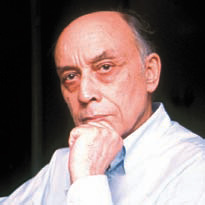
Лев Клейн. Полиглотом стать нетрудно


Лев Клейн
Лев Клейн
В этом году у меня вышли очередные пять книг и серия статей. Очевидно, не пустословных, если солидные издательства их охотно берут, а читатели раскупают. При этом я работаю один, нет у меня ни секретарей, ни подчиненных сотрудников, ни должностей, позволяющих использовать их труд как свой. Между тем я работаю много, регулярно, но не так уж безотрывно. Коллеги удивляются моей производительности, а фокус просто раскрывается: я долго жил, много работал и накопил много наработок и материалов, а также навыков спорой работы, вот теперь и пускаю их в ход. В числе факторов, способствующих этому, — знание языков. Книги, которые многим с трудом и корпением приходится переводить, я просто прочитываю или проглядываю.
Мне повезло: в семье я — второе университетское поколение. Родители были медиками, стало быть, владели латынью, говорили и на других языках. Но нас, детей, специально языкам не учили, учили музыке. Языки мы с юности осваивали сами: хотели иметь доступ к информации, которой власти нам не уделяли. Поэтому в школе обратили серьезное внимание на немецкий, а самостоятельно стали учить польский и английский. Почему польский? Потому что из «стран народной демократии» Польша была самой продвинутой к свободе, а польское радио не глушили и в магазинах продавались польские книги. И польский легче: близок к русскому и белорусскому, а белорусским мы владели. Английским овладевали после польского и немецкого. Языки пригождались не раз в жизни. На фронте меня фактически использовали как переводчика. Когда ходил без работы, подрабатывал переводами.
Образцом полиглота обычно приводят знаменитого археолога Генриха Шлимана. Он говорил на многих языках, но на всех плохо. Русский он учил по зубодробительной и архаичной поэме Тредиаковского. Даже прожив 20 лет в России, он говорил по-русски с уморительными ошибками. Свою греческую жену Софью называл в письмах в Россию «моя гомерическая жена». Подобные ошибки еще в России вызывали у его русских зятьев (братьев первой жены) гомерический хохот, когда он говорил, что хочет выступить в русской журналистике.
Программа самостоятельного изучения языка выработалась у меня постепенно на собственном опыте. Я описываю ее в своих мемуарах, а здесь повторю. Она основана на нескольких соображениях. Мы учим язык многие годы в школе и институте, и вне специальных школ мало кто усваивает больше, чем две-три расхожие фразы. А ребенок, не зная никакого языка, усваивает его за год — свободно! Значит, мы учим неправильно. Конечно, детский мозг приспособлен к такому усвоению, но ведь зато у нас, взрослых, есть разум, опыт и воля. Надо присмотреться к тому, как усваивает язык ребенок. Он не учит слов, не учит правил. Он запечатлевает целые фразы в приложении к конкретным ситуациям, а потом соображает, что отдельные слова в такой фразе можно заменять другими, и на ходу усваивает правила такой замены.
Сами слова запоминаются не изолированным заучиванием. Так запомнить их неимоверно трудно — попробуйте зазубрить страницу словаря! Но страницу осмысленного текста заучить уже легче, еще легче — стихи, а совсем легко — песню. Чем больше организованность текста, тем легче его заучить. Вот так и надо заучивать.
Рис. И. Кийко
Рис. И. Кийко
В языке минимум 200 тысяч слов — это когда же их заучишь! Но на деле мы никогда не используем всё богатство и родного языка. Мы не все слова его знаем (пассивный словарь любого человека меньше всего словаря языка), а еще меньше употребляем (наш активный словарь гораздо меньше пассивного). Мы не знаем, что значит слово «стоеросовый», но знаем, как его употребить. Словарь известных писателей — несколько десятков тысяч слов, активный словарь обычного человека — побольше словаря Эллочки-людоедки, но всё же всего несколько тысяч, пассивный — больше.
Для овладения языком знать весь словарь нам и не нужно. Лингвисты выяснили (об этом пишет замечательный исследователь и мой коллега по «Троицкому варианту» Р.М. Фрумкина), что если в каком-то тексте разрушено беспорядочно до 30% слов, то текст еще понятен, свыше 30% — уже непонятен. Но 70% текста — это не 70% словаря! Ведь слова повторяются, и есть слова, повторяемые очень часто. Созданы так называемые частотные словари языка — где слова расположены по их употребляемости (начиная с самых употребляемых). Так вот установлено, что 2000 самых употребляемых слов языка составляют 70% любого текста! Достаточно выучить эти 2000 слов — и любой текст понятен! При одном условии: что владеешь грамматикой этого языка.
Зная грамматику, можно понять очень многое в любой фразе. Академик Щерба придумал фразу, состоящую из совершенно бессмысленных (несуществующих) слов, но построенную по всем правилам русской грамматики, со всеми окончаниями: «Глокая куздра штеко будланула бокра и курдячит бокрёнка». Полная абракадабра. Но кто действует в этой фразе? Куздра. Какая куздра? Глокая. Сколько раз она будланула бокра? Один, иначе было бы: будлала. Кто такой бокрёнок? Конечно, детеныш бокра, и т. д.
Значит, выучить язык совсем не трудно. Нужно только освоить систему грамматики и рационально выучить нужную не столь уж большую часть словаря. Но для отчетливого понимания и хорошего впечатления нужно еще и правильное произношение.
Поэтому, приступая к языку, я начинал с освоения произношения. Для этого брал вузовский или другой учебник и фонозаписи — сейчас этого добра сколько угодно. Есть и радио. Хорошо использовать знающих знакомых, не откажут проверить.
Затем я принимался за грамматику. Я вычерчивал себе таблицы склонения и спряжения и тренировался в прогоне отдельных слов по этим схемам. Потом выискивал в учебниках упражнения, особенно построенные как модели-фразы, в которых нужно заменять те или иные «детали». Расчерчены таблицы, в которых фраза расписана по всем колонкам, а под каждым ее словом стоят те, которыми его можно заменить так, что смысл меняется.
Поработав так пару месяцев, я брал какую-нибудь интересную мне иностранную книгу (непременно интересную, чтобы тянуло к ней) и начинал со словарем переводить фразу за фразой, используя свои знания грамматики. Примерно трех месяцев перевода было достаточно, чтобы за многими словами уже не нужно было каждый раз лезть в словарь. У кого-то этот период может затянуться подольше — это зависит от времени, которое каждый может уделять занятиям: кто-то полчаса, кто-то два-три часа.
Особенно зависимость от словаря уменьшится, если предпринимать обратные переводы: сегодня с иностранного на русский, завтра — со своего русского перевода обратно на иностранный, и сверять.
Достигнув такого состояния, нужно сделать следующий шаг, психологически очень важный: отрыв от словаря. Откладываешь словарь в сторону и переводишь по догадке, а потом заполняешь по словарю пустые места. Теперь можно прочесть всю книгу до конца.
Одной-двух книг хватит, чтобы можно было свободно читать литературу. Но это еще не владение разговорным языком. Для освоения разговорной речи нужно учить иностранные тематические диалоги, смысл которых тебе понятен, наизусть. Учить их, как артист учит роль — представляя себя в данной ситуации. Если это сцена в ресторане, то разок мысля себя в роли официанта, другой — в роли посетителя. При этом менять некоторые слова, приспосабливая диалог к своей ситуации. Чем больше диалогов выучишь, тем больше будет диапазон твоих возможностей беседы. Да, возможности твои будут первоначально узки, но ведь ты и на русском не любую беседу можешь поддерживать. И я не любую.
Сперва тебе будет казаться, что вот занимаешься, занимаешься, а воз и ныне там. Но вдруг к тебе на улице обратился иностранец за помощью, ты понял и на вопрос его ответил, он спросил еще о чем-то — снова ответил. И вдруг понял, что разговариваешь!
Ну, есть еще дополнительные средства — заучивать в день по обиходной фразе из разговорника, учить песни, разработать себе систему повторений (повторить назавтра, потом через три дня, потом слегка через неделю). Но заниматься непременно каждый день. Впоследствии упражнять язык, особенно путем помощи иностранцам, переписки и самостоятельного сочинения своих выступлений, с которыми приходится выступать регулярно.
В понимании грамматических структур очень помогает возможность уловить аналогию с русским языком. Например, немецкий Perfekt сразу становится понятным, если подсказать, что он есть и в русском, то лько в просторечном диалекте. Например, когда малограмотная старушка говорит о сыне: «Он (есть) ушедши»Глагол-связка «есть» в русском опускается, в немецком и английском -нет. Что это значит? Что он ушел и еще не вернулся (то есть что действие глагола продолжается). Это типичный Perfekt: «Er ist gegangen». А если сказано: «Когда вы приходили в прошлый раз, он былушедши?» Это Plusquamperfekt (в английском Past Perfect).
Есть в русских диалектах и артикли, только они стоят не перед существительными, а после них. В провинции говорят: «Муж-от жену-ту бил, а дети-те плакали». Что это за -от, —ту-теЭто же типичные артикли: изменяются по родам и числам.
И еще одно замечание: второй иностранный усваивать вдвое легче, чем первый, а третий — в три раза легче. Потому что, во-первых, много общих слов, а во-вторых, подсознательно (а то и сознательно) усваиваются некие межъязыковые соответствия, грамматические схемы, общая структура языка, логика речи.
Словом, стать полиглотом не так уж трудно. Нужны только наблюдательность, систематичность и немножко нахальства.